Showing posts with label whole grains. Show all posts

Sunday, May 13, 2012

Tip #30 Constipation (in kids)

Hey, we're talking about poo here- so be warned and don't read right after dinner.  Constipation in kids vs adults can be pretty different things.  You usually can't make a kid eat or drink what you want them to, so even when you know the solution to their problem, it can be horribly frustrating because you can't fix it easily.  Let's start with the basics:

  • Fiber- there are 2 types.  Insoluble and soluble (I know, they sound so much a like!  it gets confusing).  Think of insoluble as a scrub brush, going through the insides of your intestines, scrubbing (and pushing) everything out.  These are fibers your body can't break down in fruits, vegetables, whole grains, legumes (think celery fibers, raspberry seeds, wheat germ).  Soluble fiber absorbs water and makes a gel, so while it adds bulk to your stool, it softens it as well.  Most fiber supplements have a lot of soluble fiber in them.  Foods high in soluble fiber are oatmeal, applesauce, blueberries (if you know about pectin in fruit- pectin is a soluble fiber).  There are all kinds of fiber supplements out there you might be able to add to your children's food or persuade them to eat. I know there is a clear, tasteless one that would work in most any food.
So, which type of fiber helps with constipation?  Both.  And most fruits, veggies, whole grains and legumes have a combination of both fibers.  The scrub brushes scrub out the intestines and the gelling soluble fiber softens everything up.  When someone has diarrhea, they are told to eat applesauce, white rice, bananas, tea and toast.  The foods are high in soluble fiber so that water will be absorbed and slow the transit of the nutrients through the intestines so your body can get the nutrients from the food instead of it rushing right through.  If your child is having problems with constipation, try and find fruits and veggies and whole grain foods they like and encourage lots of intake, even buying the same kinds in mass quantities if that helps their intake.  The exception to this is fruits like apples, bananas and pears- they shouldn't be eaten exclusively because they are extremely high in soluble fiber and if you take the skin off, they have little insoluble fiber to help scrub those intestines out.  HERE is a good chart that lays out how much fiber there are in some common foods.  Dietary fiber is the total of insoluble and soluble added together.  THIS chart is my favorite, but only lists total fiber together, not soluble and insoluble separately. 

  • Fluid.  Maybe I should have put this bullet first.  Whatever you can do to increase your children's fluid intake, try it.  Fruit juices watered down are also great to help with constipation.  Recommended by WebMD are prune, pear, apple and grape juices. Your kid won't drink much?  Try popsicles, watermelon or soups as ways to increase fluid intake.
  • Here is another tip that helped me with Franklin- probiotics seemed to help loosen things up for him.  There are several probiotic supplements out there that you can add to your children's food.  These should be refrigerated when you buy them, I am not an expert on these, but most probiotics I know of need to be kept refrigerated.
  • The foods to avoid are salty, processed foods and dairy- especially cheese and ice cream.  Other foods that constipate are foods high in fat and low in fiber.  Think hamburger and french fries, chicken nuggets, white pasta and white sauce (ahem- macaroni and cheese).  If your kid will only eat these types of things, you can increase the fiber in these things in the following ways- whole wheat buns, skin on fries, whole grain coating on chicken nuggets, romaine lettuce and tomato on the hamburger, no cheese, whole grain pasta and red sauce with chunks of veggies with the skin on (you are starting to get the picture, right?)  The hard part is that if you want these healthy changes in kid friendly food, you will probably have to make them yourself or pay a higher price.
  • Some children are very sensitive to lactose or gluten.  You might want to experiment and try 2 weeks without dairy or 2 weeks without gluten and see if their constipation issues resolve during one of these periods of time.  Important during any time period where you take a major food group out of a child's diet- make sure they are getting plenty of fat from other sources and taking a multivitamin to make up for loss of minerals/vitamins.  
  • If you try all these things and you still are having problems, it might be a condition you need to get medical help with.  I don't encourage the use of laxatives, even in their most organic and low dose forms, but of course there is a time and place for them.  I would only take them when needed most or for small time periods.  When I worked in the hospital, there was a woman who had had bowel obstruction because she had taken laxatives and bowel relaxers for so long, her bowels had stopped knowing how to go poop by themselves.  While of course that won't happen to everyone, I just think of it as a cautionary tale to not force your body to do something it should be trying to do on it's own.  If you need more information, go to THIS website by WebMD on toddler constipation.
~Here's to Healthy Eating (and eliminating)

Monday, April 23, 2012

Tip #29 Road Trip Food

Just got back from a long road trip and thought I would share my thoughts on snacks and road trip food.  Since I live and grew up in the northwest, I have taken a lot of long road trips.  This is what works best for me and my family:

Not my idea, or picture- but isn't it so smart??


  • Keep your snacks pretty healthy.  There is nothing worse for a digestive system than eating crap and sitting for many hours.  I like to bring grapes and baby carrots because they are easy to eat.  We also pack a lot of oranges and apples although they are messier.  Bananas are less messy, but bruise so easily. 
  • Drink lots of water.  You might not like this tip- it makes you stop and pee more.  But constipation is a real problem while traveling and keeping hydrated will help with that.  During this last trip, we traveled to much drier climates and that can also add to your constipation problems.
  • Try and get fiber.  Here it is again folks.  If you want crackers, try and get whole wheat ones.  I even opted to buy some freshly popped popcorn at one gas stop- I needed a salty snack and at least popcorn has more fiber in it than most other salty snacks.
  • Do you find that you need to keep your mouth busy on a drive?  Try getting a no-calorie drink like naturally flavored seltzer water, chewing gum or my husband's favorite- sunflower seeds.  These keep his mouth busy and his mind alert while driving.  A trick from his school bus driving days in college.  
  • Although nuts are a good snack, I do not bring many on a trip.  For one thing, they are high in calories and I would snack on too many.  Also, trail mixes can be packed with candies and dried fruit that is fine to have in small amounts, but sticks to the teeth a lot (see next point).
  • Go easy on the sweet stuff- ok, this is just personal preference, but there is nothing worse than lots of fuzzy teeth when traveling.  I try and avoid getting a lot of candy or snacks that will stick to our teeth since I know we won't be brushing for a while.  I hate the fuzzy teeth feel, so if I do have a sweet, I follow with some carrots, apple or gum or even a cheese stick.  These things can help neutralize some of the bacteria and make my teeth feel cleaner, even if they are not much better.
  • If you get drinks at the gas station, try and stick to real juice or chocolate milk.  Just better nutrition in these.  We also pack juice boxes and sometimes get the Fruitables which are a fruit/vegetable blend.
  • Plan your food stops carefully.   If my one yr old falls asleep, I don't want to stop the car and wake him up.  But we might get really hungry waiting for him.  So I pack more substantial items like peanut butter sandwiches.  This saves us money too of course.  We don't like trying to keep meat or mayo based sandwiches cold, so we almost always just do peanut butter.  But I usually can only go so long without a hot meal, so we factor that in too.  If I plan ahead and have something I can heat easily at home, that's great.  If not, we might make a planned stop somewhere where we know we can get something hot and fairly nutritious.  I am always a big fan of Wendy's for their baked potatoes and small hamburgers.  Fries make me feel crappy on a drive, so does too many beans, so watch the re-fried beans or chili!  Ha ha.
There's nothing too scientific here, just my preferences and recommendations.  If you have tips and things you have worked out while on road trips, feel free to leave it in the comments below!


Sunday, March 4, 2012

Tip #28 Complete Proteins

Here is another topic I was asked to blog on- complete proteins and combining incomplete proteins to get a complete protein.  Why learn about these?  Well, meat and dairy are your complete proteins and we all know saturated fat and cholesterol often come along with those proteins.  An added bonus is that grains, vegetables and legumes are often cheaper sources of protein.  I am using some clips from a few websites on this post, so I will reference them here in full.  I use websites I feel are reputable and when I recognize the material as sound.  Here is a blip from the CDC website that defines things nicely: http://www.cdc.gov/nutrition/everyone/basics/protein.html

What are the types of protein?

Proteins are made up of amino acids. Think of amino acids as the building blocks. There are 20 different amino acids that join together to make all types of protein. Some of these amino acids can't be made by our bodies, so these are known as essential amino acids. It's essential that our diet provide these.

In the diet, protein sources are labeled according to how many of the essential amino acids they provide:
  •  A complete protein source is one that provides all of the essential amino acids. You may also hear these sources called high quality proteins. Animal-based foods; for example, meat, poultry, fish, milk, eggs, and cheese are considered complete protein sources.
photo of various foods
  • An incomplete protein source is one that is low in one or more of the essential amino acids.Complementary proteins are two or more incomplete protein sources that together provide adequate amounts of all the essential amino acids.
photo of various foods
For example, rice contains low amounts of certain essential amino acids; however, these same essential amino acids are found in greater amounts in dry beans. Similarly, dry beans contain lower amounts of other essential amino acids that can be found in larger amounts in rice. Together, these two foods can provide adequate amounts of all the essential amino acids the body needs.
Quick Q& A
Is it true that complementary proteins must be eaten together to count as a complete protein source?
In the past, it was thought that these complementary proteins needed to be eaten at the same meal for your body to use them together. Now studies show that your body can combine complementary proteins that are eaten within the same day.1


The clincher is when you combine two incomplete proteins to get a complete one, the grain needs to be a WHOLE grain.  All these years, I thought rice and beans would be good enough- no, it needs to be brown rice.  I admit I found that out only a few years ago.  Same goes for bread, spaghetti, tortillas.  They need to be whole grain.  Here is a combining chart I found on this website:  http://www.webnd.com/plant-protein-combinations.php


GROUP #1
"Breads, Cereals, Grains"
Whole Grain Breads such as rye, wheat, oat, rice, spelt, quinoa, Long Grain Brown Rice, Whole wheat products & Whole grain cereals
these include: breakfast cereal, pasta, spaghetti, noodles, wheat products, flour products, etc.
Any item from group # 1 above to be combined with any item from one of the three groups below.
Group # 2
"Legumes"
Peas, Beans
& Lentils:
including all dried beans & peas - black, kidney, pinto, black eyed peas, runner,chick peas, sweet green peas, processed peas, baked beans, beansprouts
Group # 3
"Vegetables"
Leafy Green and Cruciferous Vegetables
including frozen vegetables
Group # 4
Nuts & Seed
Almonds, Pumpkin Seeds, Walnuts, Cashews
Peanuts, etc Sunflower, Sesame & other seeds
As far as I understand it, combining group 2, 3 or 4 together gets your a MORE complete protein than by itself, but not as complete as combining one of those groups with group 1.  Make sense?  Basically, you should try and always get whole grains in your day.  

Now, there is a whole grain that is complete in and of itself.  It's gotten a lot of attention lately.  It is quinoa (keen-wa).  I have enjoyed getting to know this little grain.  It cooks up in about 30 minutes.  HERE is a website that will give you some good instructions on cooking quinoa, and below I have added a chart on some of the non-meat source of protein so you can do some comparisons.

Protein Content of Select Vegetative Foods

Protein Content of Selected Vegetative Foods
FOOD
AMOUNT
PROTEIN(gm)
Tempeh
1 cup
41
Seitan
3 ounces
31
Soybeans, cooked
1 cup
29
Lentils, cooked
1 cup
18
Black beans, cooked
1 cup
15
Kidney beans, cooked
1 cup
13
Veggie burger
1 patty
13
Chickpeas, cooked
1 cup
12
Veggie baked beans
1 cup
12
Pinto beans, cooked
1 cup
12
Black-eyed peas,cooked
1 cup
11
Tofu, firm
4 ounces
11
Lima beans, cooked
1 cup
10
Quinoa, cooked
1 cup
9
Tofu, regular
4 ounces
9
Bagel
1 med.
(3 oz)
9
Peas, cooked
1 cup
9
Textured VegetableProtein (TVP), cooked
1/2 cup
8
Peanut butter
2 Tbsp
8
Veggie dog
1 link
8
Spaghetti, cooked
1 cup
8
Almonds
1/4 cup
8
Soy milk,commercial, plain
1 cup
7
Soy yogurt, plain
6 ounces
6
Bulgur, cooked
1 cup
6
Sunflower seeds
1/4 cup
6
Whole wheat bread
2 slices
5
Cashews
1/4 cup
5
Almond butter
2 Tbsp
5
Brown rice, cooked
1 cup
5
Spinach, cooked
1 cup
5
Broccoli, cooked
1 cup
4
Potato
1 med.
(6 oz)
4
Sources: USDA Nutrient Database for Standard Reference, Release18, 2005 and manufacturers' information.


Us Americans get plenty of protein- mostly because we get PLENTY of meat and dairy.  Why not try and cut some meat out of your diet and try some of these combinations!  Good luck and . . . 
~Here's to Healthy Eating

Friday, October 21, 2011

Q and A: Granola

I feel bad for neglecting this blog.  Unfortunately, more illness, a remodel of our computer room and about 3 bushels of apples have kept me from doing much above survival mode.
Meanwhile, I had a couple nutrition questions about granola from my sister in law that I thought I would post the answers to.

Q:  I love making granola.  My recipe calls for butter instead of oil though (1/2 c. butter to 6 c. oats).  What are the health trade offs butter for oil? Just saturated verses unsaturated fats?


A:  Yes, the trade-offs are mainly the saturated fat.  There are 56 grms of saturated fat in 1/2 cup of butter and 8 grms of saturated fat in 1/2 cup canola oil (these are according to the labels of the items I have on hand.)  You know the problems with saturated fat- raised bad (LDL) cholesterol equals higher risk of heart disease.  The only fat worse for you is trans fat- found in hydrogenated fats like shortening, margarine and many processed foods.  Butter tastes pretty good though, but in something like granola where you might not taste a difference and if you are eating it every day, I would recommend switching to oil.

Q:  I like to stretch my granola too so I add plain corn flakes and/or bran flakes to my finished granola.  I can get this cereal for under a dollar a box so I think I am saving money but am I compromising health?


A:  I stretch my granola by mixing it with cereal too!  Nothing wrong with that, especially if your cereal has the added vitamins and minerals that most cereals have.  What you are giving up is probably some fiber if you use corn flakes, but bran flakes will help with that- good fiber there.  


I have found some discount cereals I bought did not have as much vitamin and mineral percentages as other name brand cereals, so just watch that and if it's important to you, consider that.  With my young kids eating that cereal and needing those added vitamins, it's important to me- but for those of you who probably makes better health decisions throughout your day, it's probably not an issue.


In my research of this topic, I found an interesting article online.  The guy who answers the question is a little extreme, but has some good points.  Take this with a grain of salt.  Click HERE


ps- I always welcome questions and would love that to be a part of this blog!


~Here's to Healthy Eating

Sunday, October 2, 2011

Tip #18 Oatmeal

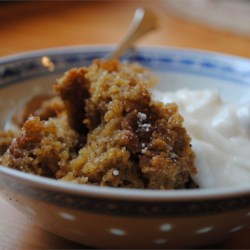
The mornings are getting colder here in Seattle, and I find myself making more hot breakfasts.  This morning we had oatmeal.  It was way too hot to serve to the kids, so I went to the fridge for some milk.  Here is one thing I don't like about oatmeal- when it's runny with milk.  So I saw the plain lowfat yogurt and pulled that out instead.  Perfect.  One dallop made our bowls of oatmeal the right temp without adding a lot of moisture.  We had enough flavorings in there that the yogurt taste didn't show through at all, plus it was creamier (oohhh- imagine Greek yogurt- yum!).  I prefer brown sugar, walnuts, cinnamon and sometimes some raisins in my oatmeal.  It's not good for you- but I put 1 tsp of butter in the girl's oatmeal- yum!
Oatmeal is so good for you, but I have a hard time with it.  If I have the time, I would rather make steel cut oats.  Growing up, I liked the cracked wheat my mom would make.  Not to be confused with cream of wheat.
Here is the BEST way to eat oatmeal.  My friend makes her kids a hot breakfast EVERY morning because her kids eat breakfast foods really well and they love this recipe- I got it from her.

Baked Oatmeal
3 cups quick cooking oats
1/2 cup brown sugar (ok, it calls for 1 cup, but you can totally use way less!!)
2 tsp baking powder
1 tsp salt
1 tsp ground cinnamon
2 eggs, lightly beaten
1 cup milk
1/2 cup butter, melted (you could use canola oil)
3/4 cup chopped, peeled apple
1/3 cup fresh or frozen peaches
1/3 cup fresh or frozen blueberries

(the fruit part is all up to you- put in whatever fresh, frozen and dried fruit you have on hand or want to try.  I saw another version of this that had 2 tsp vanilla extract and dried cranberries instead of the fruit listed here.  I would highly recommend the vanilla, it doesn't add calories and makes pretty much everything taste better!)

Combine oats, brown sugar, baking powder, salt and cinnamon in a bowl.  Combine eggs, milk and butter (or oil)- add to dry ingredients.  Stir in fruit selections.  Bake in a 8 x 8 baking dish coated with cooking spray and bake at 350 for 35-40 minutes.
I know my friend doubles this recipe and I am sure it re-heats very well.

PS- I am going to try making this recipe with rolled oats instead of quick cooking and I will let you know how it turns out.  My guess is just a little chewier- hopefully nuttier- yummm, just the way I like it.  Nuttier! (this is me having an epiphany)  You could add walnuts to this recipe- awesome.

PSS- If you make sure your oats are from a gluten free source, this would be a great gluten free breakfast.

~Here's to Healthy Eating

Wednesday, September 21, 2011

Tip #15 Getting in Whole Grains


I have not been posting too many tips lately due to the season- I have been up to my elbows trying to preserve some of the fruit and veggies that are cheap and available this time of year.  I have a great tip for saving some of that watermelon.  This seems to be a bumper year for watermelon.  But I digress and I will get to the watermelon recipe another time.  Tonight for dinner I threw together a stir fry using one of my favorite light stir fry recipes from the Cook's Illustrated The Best Light Recipe cookbook (highly recommend the book).  I didn't have time to bake brown rice the way I like it, so I was quickly making white rice.  However, I ran out and had to throw some brown rice into the pot.  I used to think that mixing brown and white rice in one pot wasn't feasible due to their different cooking times, but I have since discovered this works.  The texture of our rice tonight was great and our whole grain intake increased. Last night I did it with pasta.  I put in half whole wheat pasta 2 minutes before some regular pasta.  You see, in our household we have some biases.  Stephen spent 2 years in Italy eating regular pasta and  I spent 18 months in the Philippines eating white rice.  So sometimes we get a little crabby about whole wheat pasta and brown rice.  But mixing is a great compromise and better for us.
~Here's to Healthy Eating